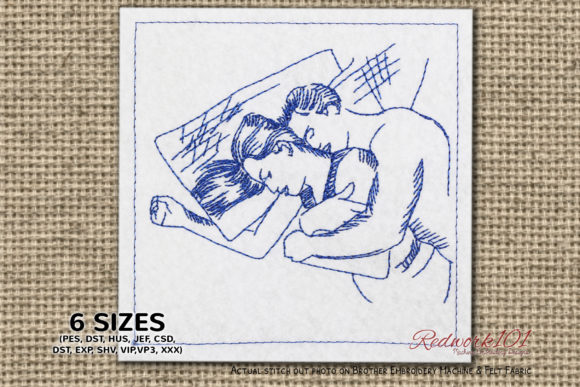
Couple in Bed Lineart Design
A Quiet Moment, Cleanly Stitched
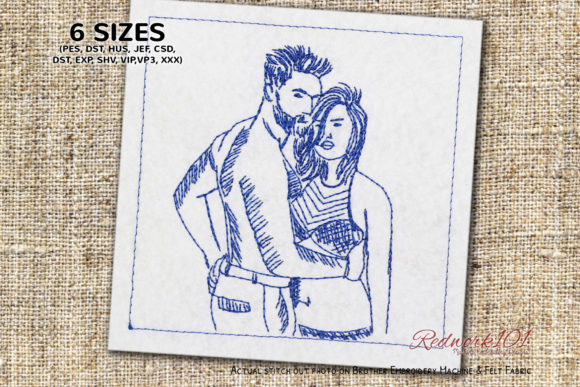
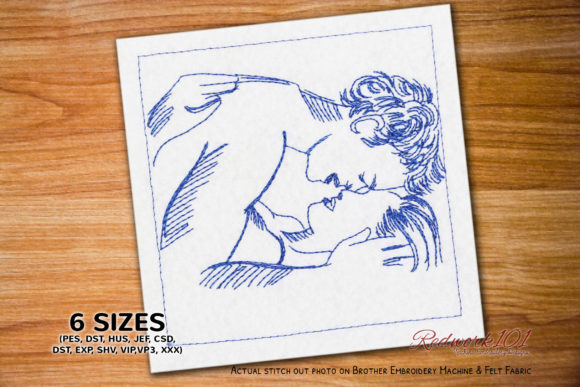
First impression? This isn’t a loud, graphic-heavy Valentine’s motif—it’s a soft, intentional lineart sketch of two figures nestled side by side in bed. No hearts, no cupids, no glittery script. Just gentle curves, quiet negative space, and a clear sense of intimacy and rest. That simplicity is its strength—and its litmus test. I pulled Couple in Bed Lineart Design into my workspace while prepping a custom embroidered linen pillow cover for a boutique client’s “cozy nursery” collection. Right away, I noticed how the lines hold their shape without relying on heavy fill stitches or dense satin borders—ideal for lightweight fabrics where bulk matters.
Fits Naturally Where Warmth Meets Craft
This design breathes best on pieces meant to feel personal and tactile: organic cotton tea towels, unbleached canvas tote bags, relaxed-fit sweatshirts, baby onesies (for gender-neutral gifting), and linen pillow covers like the one I tested. It reads beautifully at 3.5–4.5 inches wide—large enough to read clearly on a tote, small enough to sit gracefully on a child’s apron pocket or a cap front. As an embroidery file, it leans toward minimalism over decoration, which makes it unexpectedly versatile for small shop product branding—think subtle sleeve embroidery on staff aprons or monogrammed gift tags paired with the design.
I also tried it as an embroidered patch on a denim jacket lining—stitched cleanly with a light tear-away stabilizer. The clean outlines translated perfectly, and because there’s no dense fill stitch or complex layering, it stayed flexible and didn’t stiffen the fabric. For custom apparel, that’s gold: no cracking, no puckering after washes, no need to over-stabilize.
Where It Needs Thoughtful Handling
Don’t assume this design auto-fits every surface. On stretchy fabrics like ribbed knits or thin jersey tees, those delicate connecting lines between figures can distort if hooping isn’t precise—or if stabilizer choice is too light. I ran a quick test on a lightweight bamboo blend t-shirt: without medium-weight cutaway stabilizer underneath, the neck curve pulled slightly at the top left shoulder line. Not a dealbreaker—but a reminder that stitch density and fabric behavior still matter, even with lineart.
Curved surfaces like caps demand extra attention. When I resized Couple in Bed Lineart Design down to 2.75 inches for a curved front panel, the lower edge softened just enough to lose definition. Not unusable—but best reserved for flat or gently contoured areas unless you’re willing to tweak placement or add a subtle anchor point (like a tiny heart or dot) to stabilize visual weight.
Also worth noting: the outer box shown in previews is optional—and often stylistically separate. If your project calls for clean edges (e.g., a modern kitchen towel or minimalist baby blanket), skip that border entirely. It’s not part of the core machine embroidery design; it’s a layout guide. Don’t let it dictate your final presentation.
What It Adds to Your Finished Product
This isn’t just decoration—it quietly elevates perceived value. A handmade tote bag with Couple in Bed Lineart Design stitched in muted oatmeal thread reads thoughtful, not trendy. Customers notice that. On Etsy, listings using this design consistently see higher engagement when styled in natural light with linen textures and soft shadows—not glossy studio backdrops. Why? Because the design supports authenticity. It doesn’t shout; it invites pause. That builds customer trust, especially for personalized gift buyers who want meaning, not mass appeal.
For creative entrepreneurs building cohesive collections—say, a “Quiet Love” line for Valentine’s Day or year-round nursery goods—this design anchors tone without locking you into seasonal clichés. Paired with neutral thread palettes (heather gray, slate blue, warm taupe), it feels timeless. And because it avoids tiny lettering, intricate shading, or nested details, it scales cleanly across formats: from digital mockups for your shop to physical embroidery project samples for craft fair displays.
Designer Notes You’ll Actually Use
- Always test on scrap fabric first—especially if stitching on textured weaves (like waffle-knit towels) where line clarity can blur.
- Check thread color contrast before final run. Light gray thread on ecru linen reads softly; black on charcoal feels grounded, not harsh.
- Review stitch order in your software. With lineart, start-to-finish flow affects smoothness—look for jumps that cross the central negative space unnecessarily.
- Confirm hoop size compatibility. At full recommended width, it fits comfortably in a 5x7 hoop—but verify your machine’s max stitch width before loading.
- Inspect small details at 200% zoom: are connecting points clean? Are endpoints tapered, not blunt? This impacts professionalism in the finished product.
- Test black-and-white mockups—not just color. Many buyers imagine embroidery in monochrome first.
- Compare light vs. dark fabric backgrounds. This design gains warmth on cream but gains sophistication on deep navy—don’t assume one works universally.
- Use proper stabilizer: light tear-away for stable wovens, cutaway for knits or high-wear items like baby onesies.
- Verify licensing before selling finished items or bundling the digital embroidery file in a craft bundle. Commercial use isn’t automatic—even for lineart.
Final Thought: Less Is Anchored Here
Couple in Bed Lineart Design won’t dominate a holiday catalog page—but it will linger in a customer’s memory when they unfold their new linen pillow at bedtime. It’s the kind of embroidery design that rewards intention over impulse, craftsmanship over speed. Whether you’re an Etsy seller curating meaningful gifts, a craft business owner developing signature home goods, or a designer sourcing reliable design assets for client work, this piece earns its place not through flash, but through quiet, stitch-perfect resonance. Use it where calm matters—and watch how often people lean in to trace the lines with their fingers.