Hanging Sloth: A Craft Fair-Worthy Wild Animal Embroidery Design
As an embroidery designer who’s prepped over 200 craft fair booths—from Portland bazaars to Nashville maker markets—I’ve learned that not every animal design translates to sales. Hanging Sloth stands out—not because it’s flashy, but because it’s instantly legible, emotionally warm, and commercially flexible. It lands somewhere between whimsical and grounded: soft enough for a baby gift, clever enough for a teen’s tote, and detailed enough to feel premium—but never fussy. That balance is rare in the Wild Animals category, where many designs swing too cartoonish or too botanical.
First Impression: Cute Without Cloying, Playful Without Clutter
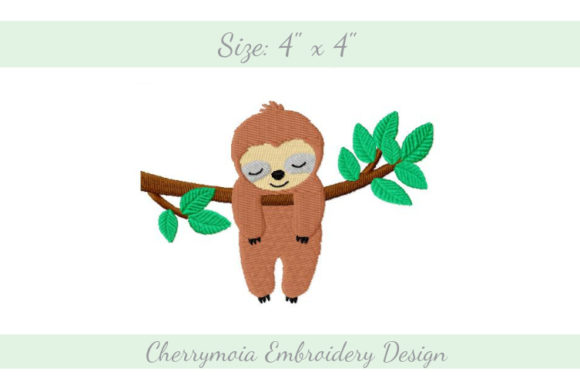
“Hanging Sloth” evokes slow joy—curled limbs, gentle curve of the face, quiet confidence. It reads as modern rustic: no glitter, no exaggerated eyes, no forced humor. At booth level, that matters. Customers scanning a crowded table don’t pause for complexity—they pause for resonance. And Hanging Sloth delivers that in under two seconds. It’s not “farmhouse” in the shiplap sense, nor “minimalist” in the monochrome way—it’s textured storytelling stitched into thread.
Where Hanging Sloth Shines (and Where It Needs Care)
Tote bags: Ideal as a centered chest placement or subtle side accent. The sloth’s natural curve follows the bag’s drape beautifully—no distortion, no awkward stretching. Works especially well on natural canvas or unbleached cotton where stitch texture reads clearly.
Aprons and tea towel embroidery: A standout on the lower corner of a chef’s apron or folded edge of a linen tea towel. Its compact silhouette avoids overwhelming utility-focused items—and its gentle posture complements kitchen warmth without competing with food photography aesthetics.
Embroidered patches and fabric pouches: This is where Hanging Sloth becomes a small-shop hero. As a patch, it reads cleanly at 2.5–3 inches wide. On a drawstring pouch or zippered clutch, it adds handmade charm without demanding attention—just enough personality to spark a “Where’d you get that?” moment.
Caps and pillow covers: Use caution here. The sloth’s hanging pose doesn’t adapt well to the curved surface of a baseball cap unless placed on the flat front panel—and even then, test hoop size and stabilizer thoroughly. On pillow covers? Perfect. Centered on a 16” square or nestled in a corner of a textured linen blend, it adds tactile softness and visual rest.
Production Realities Every Embroidery Business Owner Should Know
This is a digital embroidery file, not a printable or iron-on. You need an embroidery machine—and that means production success hinges on prep, not just pixel appeal. Here’s what I check before cutting a single piece of stabilizer:
- Stitch density: Sloths have fur-like texture in their limbs and face—so dense areas may require lightweight tear-away + cutaway combo stabilizer on heavier fabrics like denim or terry cloth.
- Fabric texture matters: On highly napped towels or bouclé linen, tiny facial details (like the closed eyes or subtle muzzle line) can blur. Always test on your exact fabric—not a swatch substitute.
- Thread colors: The design shines in muted earth tones (olive, oat, charcoal, clay), but avoid low-contrast combos on dark fabric—especially if stitching small-scale versions. What reads softly online may vanish in person under fair lighting.
- Hoop size & spacing: Confirm the file fits your most-used hoop without re-hooping mid-stitch. Also verify spacing between elements—if there’s any internal layering (e.g., layered leaves or shadowing), tight curves could cause thread breaks at high speed.
Why Hanging Sloth Converts at Craft Fairs (and on Etsy)
At a craft fair, Hanging Sloth works as both booth anchor and conversation starter. I’ve seen customers point to it on a tote, then buy three matching tea towels—and later return for a custom patch order. Why? Because it feels intentional, not algorithmic. It signals care: in the curve of the tail, the evenness of the fill, the restraint in detail. That perception lifts perceived value—making it easier to price at $48 for an embroidered market bag instead of $32.
For Etsy sellers and digital designers alike, Hanging Sloth is strong design assets material. Paired with a clean printable mockup (think: sloth on a kraft-paper wrapped soap bar or tucked into a woven basket), it performs well in lifestyle shots. Its neutral vibe means it doesn’t clash with seasonal shop themes—equally at home in spring botanical bundles or cozy fall collections.
Final Designer Notes Before You Stitch
Before adding Hanging Sloth to your next batch of finished product:
- Run a test on scrap fabric—same type, same color, same stabilizer you’ll use for production.
- Check thread contrast in daylight AND under warm booth lighting (many craft fairs use amber bulbs).
- Review spacing and overlap—especially if combining with text or other motifs on aprons or totes.
- Confirm hoop size compatibility—don’t assume it fits your 5x7 if the file was digitized for 4x4.
- Inspect stitch density visually: zoom in on limb joints and facial features. If threads look compressed or muddy, adjust underlay or reduce speed.
- Create at least one real-world mockup—not just a digital preview. Drape it, hold it, photograph it beside your other bestsellers.
- Compare fabric colors side-by-side: oat vs. ecru vs. heather grey can shift the entire mood of the machine embroidery design.
- Verify commercial licensing terms. Since this is a digital embroidery file, confirm whether resale of finished products is permitted before listing on Etsy or wholesale platforms.
Hanging Sloth isn’t just another Embroidery file—it’s a thoughtful, booth-ready asset for makers who value clarity, charm, and craftsmanship. It won’t shout across the aisle, but it will hold someone’s gaze long enough to ask, “Is that hand-stitched?” And in a world of mass-produced charm, that question is pure gold.